
Safety & Safety Rules

Safety & Safety Rules
Safety is Paramount at Chester Yacht Club
Our coaching staff are all certified for First Aid / CPR, Pleasure Craft Operators Certificate, Coach Boat Safety and Radio Operators Certificate. All coaches are insured through Sail Canada. On the water, coaches carry a Participant Information Form and Emergency Action Plan (EAP) at all times. Each coach boat is equipped with all Transport Canada required safety equipment and an updated first aid kit and a VHF radio. All instructors are required adhere to all Club safety requirements and EAP procedures. Depending upon the severity of the accident or incident, the Club’s Emergency Action/Response Plan may be activated.
If an injury is serious, emergency responders may be contacted, a parent or guardian will be notified immediately and the individual may be brought to the local emergency department. An instructor will accompany the sailor to the emergency department and bring their Medical Form. Emergency numbers are posted next to all phones. Sailor Medical Forms are on file in the Sailing Office.
Any injury to a sailor or instructor will be reported in writing on the appropriate Accident/Incident Report Form. The form will be completed by the instructor involved in the incident and the LTSD. Copies will be filed in the Sailing Office on the day of the occurrence and a copy of the report will be retained by the instructors involved. The Accident/Incident Report will establish the facts as they occurred and the actions taken by the staff while dealing with the accident. Procedures for reporting any accident, minor or major, are strictly enforced.
Weather
Sailing is a complex sport to master, and it’s important that students feel comfortable with their skills and within the boat.
It is also important that sailors learn to respect and appreciate the power of the environment in which they sail. Wind, waves and current are some of the aspects that make sailing so exhilarating, but they can be factors that can make sailing quite frightening for the inexperienced sailor.
Maintaining a fun and safe learning environment is our main priority. When wind speeds exceed 15 knots, it is at the discretion of the instructor to decide whether the Wet Feet and CANSail 1 program will go out on the water.
If there is heavy rain, we will instead play sailing-related games and provide land-based sailing lessons, such as what to wear when sailing, how to tie knots, and how to read the wind.
Swimming
CYC is very lucky to be located on beautiful and clean Mahone Bay. Our sailors will, inevitably, hop in “the drink”, and swimming off our docks during lunch and at the end of the day is a favourite pastime.
In order to keep everyone safe, we ask that all sailors abide by the following rules for swimming during Junior Sailing:
- Sailors must be careful to look for any boats or tenders that might be coming or going from the CYC docks and floats
- All jumping must be feet- first, and there will be no throwing or pushing friends into the water!
- Sailors in Wet Feet and CANSail 1 must wear life jackets/PFDs when swimming and jumping off any dock
- Sailors in CANSail 2 and up will have their swimming ability assessed by the Head Instructor
All students, regardless of age or years in the program, are required to take a swim check on the first day of the session. The purpose of the swim check is for students to become accustomed to being in the water with their life jackets on and for instructors to assess sailors’ swimming ability.
Junior Sailing Safety Rules
The following are general safety rules that are to be followed by everyone in the CYC Junior Sailing program. Junior sailors will be asked to sign a copy of the rules and discipline policy, prior to the start of their session.
- No sailors on docks or floats without supervision and a PFD
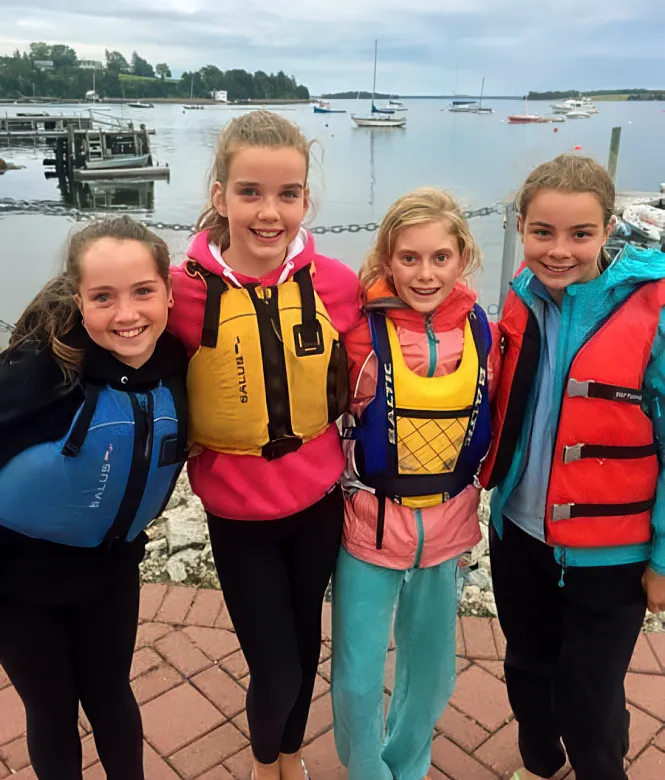
- Life jackets/PFDs must be worn and secured at all times on docks, floats, boats or in the water by sailors, instructors and coaches
- Closed-toe footwear to be worn at all times
- No running
- No unsupervised swimming
- No jumping off boats (except with the permission of the instructors)
- Respect one another.
No hitting, pushing, roughhousing - Use respectful language.
No swearing, foul, or rude language - No littering on land or water
- Stay with the class unless you have permission from an instructor to leave
- Sailors must make an effort to sail out and return to docks together or with a buddy
- Prior to drills, all boats must stay within hailing distance of the safety or coach boat
- No destruction of CYC or private property
- No smoking, drugs or alcohol
- Watch fingers and feet between boats, docks and moving parts
- Club owned boats must be properly returned and put away after use
- Sailors must make every effort to avoid collisions